Tummy tuck scars are easily hidden by clothing, underwear, and swimsuits, but patients still want to know what to expect. This blog discusses how incision placement directly relates to tummy tuck scars, what scars look like as they heal, and how to prevent large, raised scars through scar therapy options.
5 Min Read:
Will My Tummy Tuck Leave Scars?
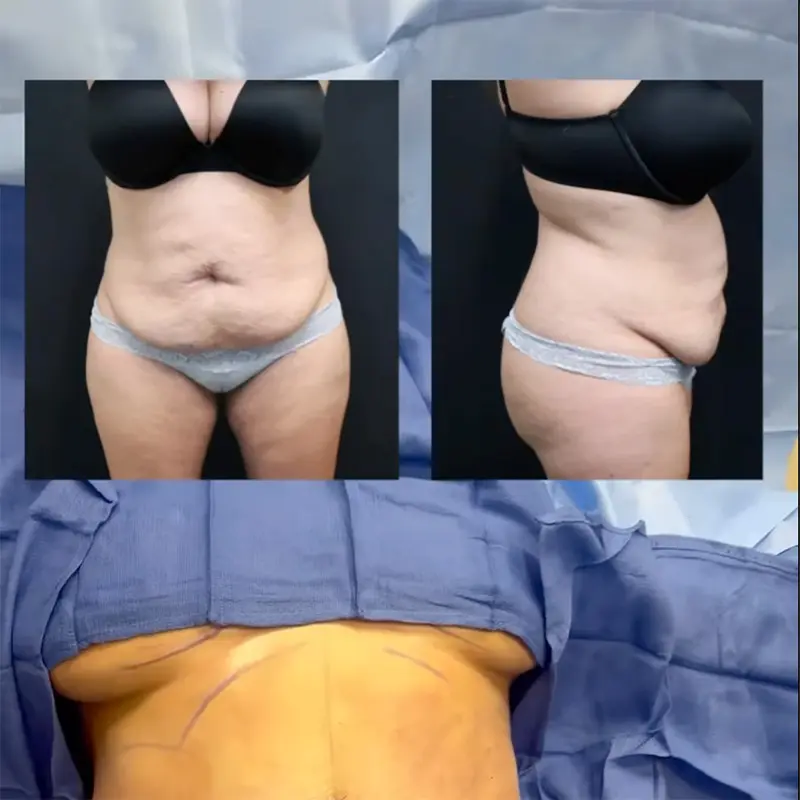
If pregnancy or weight loss has left your abdomen loose and sagging, with extra skin that exercise doesn’t help eliminate, it might be time for a tummy tuck. This procedure, also known as abdominoplasty, is a transformative body contouring surgery that delivers results unlike any other. By surgically tightening the separated abdominal muscles (diastasis recti) and removing excess skin and tissue, a tummy tuck reveals a flat, taut abdomen for a smooth, contoured midsection.
So, what’s the catch? Well, with every surgical procedure, there is a risk of scarring, and tummy tucks are no different. Any time an incision is made on the body, there will be a scar—but it’s not as bad as you might think.
For example, experienced body contouring surgeons like Dr. Shahriar Mabourakh are highly adept at ensuring sutures are neat and incisions are placed as discreetly as possible, thereby preventing large, unsightly scars. Additionally, the different types of tummy tucks require different incisions and therefore have different scar patterns, so it depends on the type you choose. We’ll take a look at different types of abdominoplasty below.
Tummy Tuck Options and Scar Patterns
Mini Tummy Tuck
The least invasive option, a mini tummy tuck, also has the shortest incision—just above the pubic bone, about the same size and placement as a cesarean scar. If you’re worried about a large scar or only need localized revision (a lower belly pooch with minimal skin laxity), this might be a good option for you. And yes, if you already have a C-section scar, Dr. Mabourakh can try to use the same incision placement.
Traditional, or Full Tummy Tuck
This option allows for the full revision of the midsection and is the most commonly performed type of tummy tuck. If you have loose skin and excess fat/tissue throughout, as well as separated abdominal muscles, this is the only option that will get you results—and fantastic ones at that. The incision is low on the abdomen, below where your pants or underwear sit, and runs horizontally from hip to hip, with one small incision within the navel.
Tummy Tuck Scar Healing Stages
No matter which option you choose, your scar will go through its own healing stages, eventually lightening and thinning out to a barely visible line. Here’s what you can expect from your tummy tuck scar healing:
- Initial healing stage (Weeks 1–3)
Right after your procedure, your scar will be an open incision, sutured together. As the incision closes and forms a scab, it will appear like a thin red line and be tender. Try not to touch it or make any movements that could stretch it, as this can worsen scarring.
- Inflammatory Phase (Months 1–3)
Your scar may become redder, raised, and bumpy as blood flow increases and collagen builds up. It’s in this period that you can start scar care, such as gently massaging it to break up collagen or using silicone scar sheets to keep the area soft and protected.
- Flattening, Softening (Months 3–6)
Now the redness is beginning to fade and the scar is flattening. Continue caring for your scar as directed, and protect it from sun exposure.
- Maturation (Months 6–12+)
This is the final stage, as the scar begins to mature, becoming much lighter: silvery-white or close to your skin tone. It will also become smoother and flatter.
Tips to Improve Scars
Scars are inevitable and a normal part of any surgery. Genetics play a role as well, so if you are prone to large or raised scars, it’s likely that’s what you’ll experience after your tummy tuck. Be sure to let your surgeon know if you are prone to keloids or other types of scars so they can adjust their approach and help reduce this risk. However, you can make a difference in its appearance by how you care for it.
Be sure to follow your surgeon’s instructions as best you can, including those regarding how to care for your incision, when and how to perform scar care, and movement restrictions. Bending or lifting too soon, or applying too much pressure on your incisions, can prompt the body to overreact and increase collagen production, resulting in a larger scar. Also, always protect your scar from sun exposure, as sun damage can cause scars to darken.
Scars are natural and can be easily managed with the right steps and the guidance of your plastic surgeon. Tummy tuck patients are ecstatic with their results, as their self-confidence and happiness greatly outweigh the cost of a small scar.
Want to Learn More About Tummy Tucks in Sacramento, CA?
Call Dr. Mabourakh today and learn how a tummy tuck or mini tummy tuck can restore a toned, slimmed abdomen after pregnancy or weight loss. Call Folsom Plastic Surgery at (916) 984-8585 or complete the contact form to request a tummy tuck consultation.